• Home
  • About
  • Directory
  • News
  • HOAF TV
  • Shop
  • Our Community
    • Community
    • Useful Resources
  • Contact
Facebook Instagram Youtube Twitter
  • Home
  • About
  • Directory
  • News
  • HOAF TV
  • Shop
  • Our Community
    • Community
    • Useful Resources
  • Contact
Join House of Africa
CONNECT TO OUR NETWORK
  • Home
  • About
  • Directory
  • News
  • HOAF TV
  • Shop
  • Our Community
    • Community
    • Useful Resources
  • Contact
Join House of Africa
CONNECT TO OUR NETWORK
Uncategorized

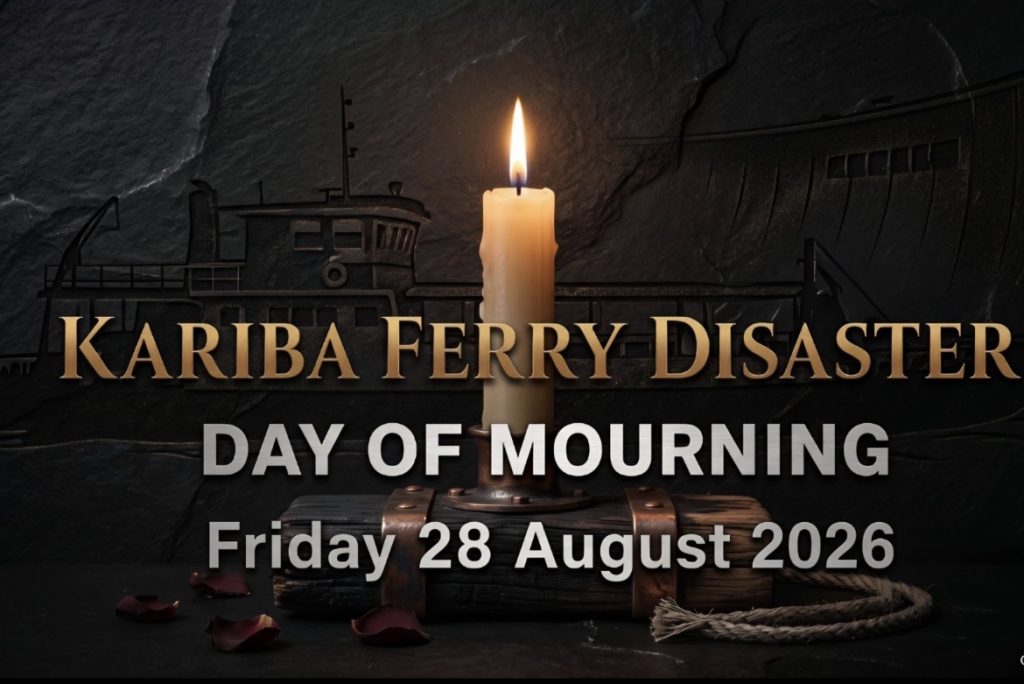
97 Lives Lost, Questions Remain: Zimbabweans Demand Accountability After Kariba Ferry Disaster

By hoaf  Published On August 28, 2026
Screenshot

Zimbabwe — Two weeks after the Mbuya Nehanda ferry capsized on Lake Kariba, claiming the lives of 97 people, Zimbabweans are turning a day of mourning into a powerful call for accountability, insisting that those who died must not be reduced to statistics or forgotten once the headlines fade.

The disaster, which occurred on August 11, has become Zimbabwe’s deadliest maritime tragedy. The ferry, operated by the government’s Rural Infrastructure Development Agency (RIDA), was travelling from Kariba towards Chalala fishing camps when it capsized. Authorities have confirmed that 97 people died, while 96 victims have so far been identified by their next of kin. (Herald Online)

But for grieving families, the tragedy is far more than a number.

They were fathers and mothers. Sons and daughters. Brothers and sisters. Cousins, friends and neighbours.

Behind each of the 97 deaths is a family whose life has been permanently altered.

A Day of Mourning — and Accountability

Across Zimbabwe and among Zimbabweans abroad, mourners are wearing black and changing their social-media profile photographs to black in remembrance of those who perished.

The message is simple: they will not be forgotten.

The mourning is also accompanied by a demand for answers.

Families and community members want to know how a government-operated ferry could be allowed to undertake its journey under circumstances that investigators are now examining. Preliminary investigations have raised serious questions about passenger numbers, cargo and operational procedures. Reports indicate that the vessel had an authorised capacity of 90 passengers, while the number aboard may have been substantially higher. (Newsreel Zimbabwe)

Those questions are now moving beyond public anger and into the courts.

RIDA district official Ignitious Chiome has been arrested and charged with culpable homicide in connection with the disaster, with prosecutors alleging that administrative failures, overloading and operational lapses contributed to the tragedy. The allegations remain subject to due process and determination by the courts. (Newsreel Zimbabwe)

For many Zimbabweans, however, the central question is bigger than the fate of one official.

Who knew? Who approved the voyage? Who was responsible for enforcing safety regulations? Who was responsible for the condition and operation of the vessel? And could these deaths have been prevented?

The Human Cost of Neglect

For communities around Lake Kariba, the ferry was not simply a boat.

It was a lifeline.

It connected remote communities to markets, fishing grounds, livelihoods and essential services. Government officials have acknowledged the importance of restoring passenger transport on the lake, with authorities exploring the deployment of another vessel following the disaster. (The Zimbabwean)

The loss of the Mbuya Nehanda has therefore created a second crisis for communities already devastated by the deaths: how do they continue their lives without their relatives and without reliable transport?

They must return to communities where roads remain inadequate.

They must continue travelling across difficult terrain.

They must rebuild households that have lost breadwinners, parents and children.

And they must somehow continue living with the knowledge that the people they loved will never come home.

Where Was the Leadership?

The absence — or perceived absence — of visible presidential engagement with grieving families has also become a source of anger among some mourners and activists.

President Emmerson Mnangagwa declared the tragedy a State of Disaster and pledged government support to affected families. (People.com)

Yet critics argue that symbolic leadership matters just as much as government statements.

They wanted the country’s highest office to stand before the bereaved community, look families in the eyes and say:

“We are sorry. We failed you. We will do better.”

For those who believe the tragedy was preventable, such an acknowledgment would have carried profound meaning.

Instead, frustration has grown over what critics describe as a wider culture of impunity and insufficient accountability within government institutions.

The Bigger Question: What Is the Value of a Zimbabwean Life?

The Kariba disaster has reopened an uncomfortable national conversation about public infrastructure, institutional responsibility and the value placed on ordinary citizens’ lives.

The question is not merely why a ferry sank.

The deeper question is why a government transport system was allowed to reach a point where preventable safety concerns could potentially become a catastrophe.

The Mbuya Nehanda was reportedly 41 years old and served communities that had few alternatives. Investigators must now establish whether its age, condition, passenger numbers, cargo, operating procedures, weather conditions or other factors contributed to the sinking.

The public deserves evidence-based answers — not speculation, political blame-shifting or convenient scapegoats.

Accountability Must Follow Mourning

There are also wider political allegations circulating about government finances and the use of public resources, including claims concerning hundreds of millions of US dollars allegedly unaccounted for within institutions associated with the presidency.

Such allegations require documentary evidence and independent investigation before they can responsibly be presented as established fact.

But the underlying question remains legitimate:

If public resources are available for government priorities, why do ordinary Zimbabweans continue to face unsafe transport, deteriorating infrastructure and inadequate public services?

That question should not be dismissed as political rhetoric.

It should be answered through transparent budgets, audits, procurement records, parliamentary scrutiny and independent investigations.

Because accountability is not about satisfying political opponents.

It is about protecting citizens.

Justice for the 97

The families of the Mbuya Nehanda victims do not need political slogans.

They need the truth.

They need justice.

They need meaningful compensation and long-term support.

And they need guarantees that another family will not have to experience the same nightmare because a known safety problem was ignored.

Zimbabwe has already witnessed the recovery of 97 bodies from Lake Kariba. The wreckage of the ferry may eventually be removed, investigations may be completed and the legal process may determine individual responsibility.

But the greatest test will be whether the country learns from the disaster.

The 97 people who died on Lake Kariba were not cargo.

They were not statistics.

They were human beings whose lives mattered.

And when the mourning period ends, their families will still be there.

Their empty chairs will still be there.

Their unanswered questions will still be there.

Their children will still ask where their parents have gone.

Their parents will still wait for children who will never return.

That is why Zimbabweans wearing black today are sending a message that extends beyond mourning:

Remember the 97.

Tell the truth.

Establish responsibility.

Deliver justice.

And make sure that what happened on Lake Kariba never happens again.

Share this
Tweet

Leave A Reply Cancel reply

You must be logged in to post a comment.

Job Sikhala’s South African Court Case Postponed as Prosecutors Review Investigation Findings
Previous Article
Why This Regime Cannot Survive the Anger of Zimbabwe’s Masses

Next Article
  • Recent Posts

    • Why This Regime Cannot Survive the Anger of Zimbabwe’s Masses

      August 29, 2026
    • 97 Lives Lost, Questions Remain: Zimbabweans Demand Accountability After Kariba Ferry Disaster
      August 28, 2026
    • Job Sikhala’s South African Court Case Postponed as Prosecutors Review Investigation Findings
      August 3, 2026
    • Two Opposition Leaders Meet in Maputo to Discuss Regional Democratic Cooperation
      July 29, 2026


House of Africa believes in challenging the status quo and inspiring leaders to secure the future of global citizens.

Explore

Home
About HOAF
Community
Privacy Policy
Terms of Service

Connect

Business Directory
Lounge (Forum)
Contact

Office

42 Selkirk Drive
Oakridge Park
Milton Keynes
England MK14 6FF
Facebook Instagram Youtube Twitter
Copyright © 2020 House of Africa Foundation.
All Rights Reserved. Company No.: 08314838
Site designed by Startable.
Skip to toolbar
  • About WordPress
    • WordPress.org
    • Documentation
    • Learn WordPress
    • Support
    • Feedback
  • Log in
  • Register