• Home
  • About
  • Directory
  • News
  • HOAF TV
  • Shop
  • Our Community
    • Community
    • Useful Resources
  • Contact
Facebook Instagram Youtube Twitter
  • Home
  • About
  • Directory
  • News
  • HOAF TV
  • Shop
  • Our Community
    • Community
    • Useful Resources
  • Contact
Join House of Africa
CONNECT TO OUR NETWORK
  • Home
  • About
  • Directory
  • News
  • HOAF TV
  • Shop
  • Our Community
    • Community
    • Useful Resources
  • Contact
Join House of Africa
CONNECT TO OUR NETWORK
Uncategorized

Why This Regime Cannot Survive the Anger of Zimbabwe’s Masses

By hoaf  Published On August 29, 2026
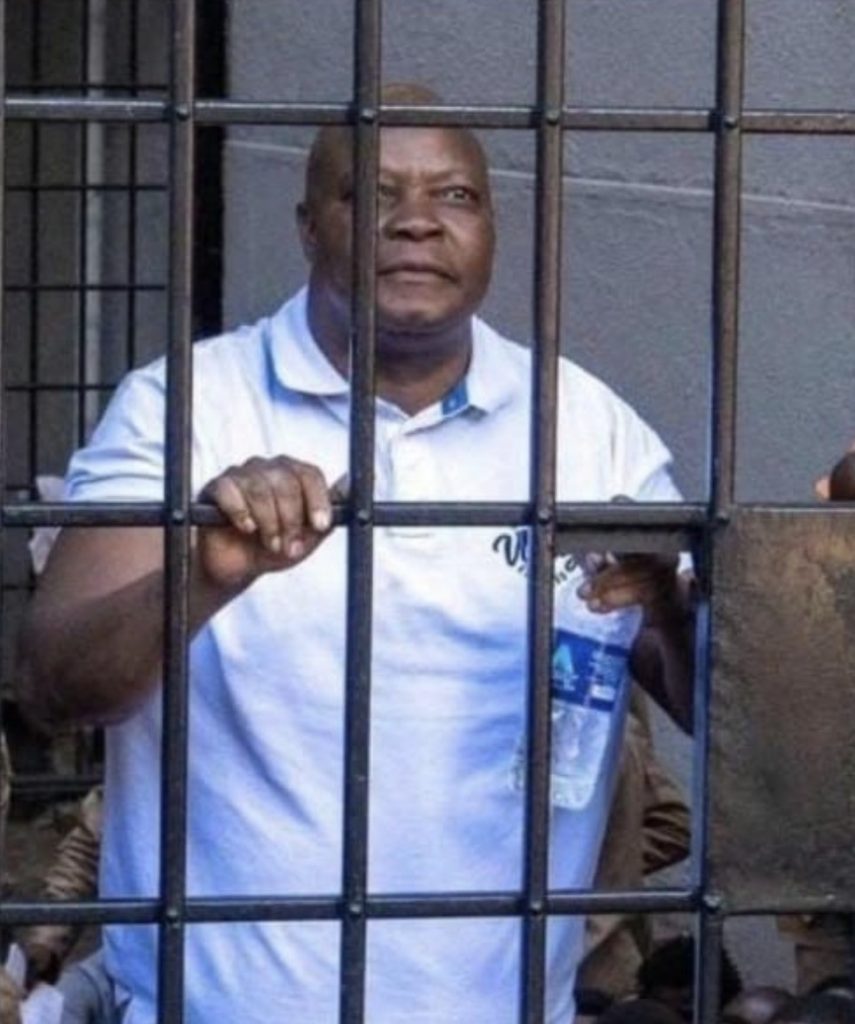
Screenshot

By Hon. Job Sikhala

Zimbabwe’s descent into authoritarian rule can no longer be dismissed as a political disagreement or treated as an ordinary contest for power. Since the military intervention that culminated in the removal of Robert Mugabe in November 2017, the country has witnessed a sustained deterioration in democratic institutions, civil liberties and respect for fundamental human rights.

The machinery of repression has become increasingly sophisticated and increasingly brazen. Arbitrary arrests, politically motivated prosecutions, prolonged detention, intimidation, violence and restrictions on public assembly have been deployed against those who challenge the government.

But there is one fundamental reality that repression cannot erase: the anger of the Zimbabwean people remains alive.

The regime may arrest individuals. It may silence journalists, intimidate activists, deploy heavily armed police and restrict public gatherings. It may attempt to manipulate the law to protect its hold on power.

But it cannot arrest an entire nation.

A Legacy of Repression

The pattern became unmistakable after the July 2018 elections.

When citizens took to the streets in Harare to protest alleged electoral irregularities, security forces opened fire on demonstrators. Six civilians were killed.

The following January, Zimbabweans again took to the streets, this time protesting steep fuel-price increases and deteriorating economic conditions. The government’s response was brutal. Human rights organisations documented killings, injuries, mass arrests and allegations of torture as police and military forces moved against protesters and opposition supporters.

These were not isolated incidents.

Between 2020 and 2023, opposition activists, political leaders and civil society figures were repeatedly arrested and subjected to prolonged pre-trial detention. Charges relating to public violence, obstruction of justice and other offences were repeatedly deployed against political opponents.

For many Zimbabweans, the courtroom ceased to represent merely a place where justice was determined. It increasingly became another arena in which political battles were fought.

The message was clear: challenge the establishment and you risk losing your liberty.

Yet despite the arrests, the resistance survived.

The Politics of Fear

The repression did not stop at arrests.

Opposition activists, student leaders and journalists were subjected to abductions, brief forced disappearances, beatings and torture. Masked assailants and alleged state agents were repeatedly implicated in acts designed to frighten citizens away from political mobilisation.

Fear became a political instrument.

But fear has a shelf life.

A population subjected to years of economic hardship, political exclusion and repression eventually reaches a point where fear is overtaken by anger.

That is where Zimbabwe stands today.

The disputed August 2023 elections deepened the crisis. The SADC Electoral Observation Mission concluded that the elections did not comply with certain constitutional requirements and regional and international standards. In the aftermath, reports of intimidation, displacement, violence and attacks against opposition supporters further exposed the fragility of Zimbabwe’s democratic environment.

Instead of addressing the underlying grievances, the government intensified its efforts to restrict political space.

When the Law Becomes a Weapon

The so-called “Patriotic Act” became one of the clearest manifestations of this approach.

Legislation was increasingly used not merely to regulate society but to constrain dissent and criminalise forms of speech considered hostile to the government’s interests.

Journalists and media organisations found themselves operating under mounting pressure. The prosecution of critical voices became a warning to others.

But legislation cannot manufacture legitimacy.

A government can pass laws restricting speech. It cannot legislate away public anger.

It can criminalise protest. It cannot criminalise the grievances that produce protest.

And it can intimidate individuals. It cannot intimidate an entire generation forever.

The Constitutional Power Grab

The most dangerous chapter of this crisis emerged when the proposal to extend the tenure of the country’s political leadership began to move from what many initially regarded as political rhetoric into an organised campaign to alter Zimbabwe’s constitutional order.

What began as a seemingly absurd proposition evolved into a national political crisis.

In 2026, the government and its parliamentary majority pushed through constitutional changes that critics say fundamentally alter the electoral architecture of Zimbabwe, including extending presidential and parliamentary terms from five to seven years and moving the next elections from 2028 to 2030.

For millions of Zimbabweans, this is not simply a technical constitutional amendment.

It is a question of sovereignty.

Who owns Zimbabwe’s future — the people or those temporarily entrusted with political office?

A constitution is supposed to restrain power, not become a vehicle through which those in power extend their own tenure.

The intimidation surrounding the consultation process only deepened public suspicion. Those who challenged the proposed amendments faced hostility, threats and, in some cases, physical attacks.

Professor Lovemore Madhuku was attacked at the National Constitutional Assembly headquarters. Tendai Biti and his colleague were arrested in Mutare and continue to face legal proceedings.

Across the country, public meetings and demonstrations against the proposed constitutional changes were restricted or prevented, with heavy police deployments and lockdowns reported in urban centres.

A government confident in the legitimacy of its constitutional project should not fear its own citizens assembling peacefully to express opposition.

We Must Never Forget

Zimbabweans must also remember what happened ahead of the country’s hosting of the SADC Summit.

More than 160 activists, civil society members and opposition figures were arrested during a period of heightened political repression. Among those detained were opposition figures such as Jacob Ngarivhume and Jameson Timba.

Robson Chere, Namatai Kwekweza and a former Harare councillor were also subjected to serious allegations of abuse, including an incident involving alleged torture at an airport.

These events must not disappear into the fog of political amnesia.

A nation that forgets abuses creates the conditions for their repetition.

The names of those arrested, beaten, tortured or persecuted must remain part of Zimbabwe’s national memory.

The Regime’s Greatest Miscalculation

The greatest mistake this regime is making is believing that repression is the same thing as control.

It is not.

Arrests can remove people from the streets temporarily. They cannot remove their ideas.

Court cases can consume years of people’s lives. They cannot extinguish their political aspirations.

Police roadblocks can prevent a demonstration from taking place. They cannot prevent citizens from discussing their grievances in homes, workplaces, churches, universities and communities.

And legislation can restrict political activity. It cannot manufacture consent.

The government may believe that Zimbabweans have been sufficiently intimidated into submission.

That is a dangerous miscalculation.

Silence is not consent.

Sometimes silence is exhaustion.

Sometimes it is fear.

Sometimes it is people watching, remembering and waiting.

The Anger of the Masses

The anger accumulating across Zimbabwe is not the product of one political party or one opposition leader.

It is rooted in years of economic hardship, unemployment, corruption allegations, declining public services, political repression and the perception that ordinary citizens have little meaningful influence over the direction of their country.

This anger cannot simply be dismissed as the work of “regime change agents” or political opponents.

A government that constantly blames outsiders for domestic discontent eventually loses the ability to hear what its own citizens are saying.

Zimbabweans are saying that they want accountable government.

They want elections whose outcomes are credible.

They want institutions that serve citizens rather than political interests.

They want their constitutional rights respected.

They want leaders who understand that political office is a public trust, not hereditary property.

Above all, they want to be treated as citizens rather than subjects.

Resistance Is Still Alive

Despite everything that has happened since 2017, resistance has not disappeared.

It has changed form.

It has moved from streets into communities, from political rallies into conversations, from public demonstrations into digital spaces and from individual activism into a broader national consciousness.

The state may have the police, the prisons and the machinery of coercion.

But the people possess something no government can permanently confiscate:

their collective will.

That does not mean Zimbabweans must respond to repression with violence. On the contrary, the most powerful resistance is one that refuses to give an authoritarian system the excuse it seeks to justify further repression.

Peaceful civic resistance, democratic organising, documentation of abuses, legal challenges, independent journalism and regional and international solidarity remain powerful instruments for citizens determined to reclaim their democratic space.

The struggle for freedom must never become a justification for destroying the very society we seek to liberate.

A Warning to Those in Power

History is filled with governments that believed they were too powerful to fall.

Many discovered too late that political power is temporary.

No regime can indefinitely govern against the overwhelming aspirations of its own people. No constitution can permanently protect political leaders from accountability. No security apparatus can manufacture genuine legitimacy.

Zimbabwe does not belong to a political party.

It does not belong to a president.

It does not belong to the military.

It does not belong to those who currently occupy government offices.

Zimbabwe belongs to its people.

And the people have a right to determine who governs them, for how long and under what constitutional arrangements.

The present crisis will not disappear simply because the government refuses to acknowledge it.

It will remain until the grievances of Zimbabweans are heard and addressed.

The choice before those in power is therefore not complicated.

They can continue down the path of repression, constitutional manipulation and political exclusion — or they can listen to the people and restore confidence in Zimbabwe’s democratic institutions.

Because governments can suppress anger.

They can postpone confrontation.

They can silence individuals.

But they cannot permanently suppress the political consciousness of an entire people.

The anger of Zimbabwe’s masses is real.

The resistance remains alive.

And history will ultimately judge those who chose to listen to their citizens — and those who chose to silence them.

Share this
Tweet

Leave A Reply Cancel reply

You must be logged in to post a comment.

97 Lives Lost, Questions Remain: Zimbabweans Demand Accountability After Kariba Ferry Disaster
Previous Article
  • Recent Posts

    • Why This Regime Cannot Survive the Anger of Zimbabwe’s Masses

      August 29, 2026
    • 97 Lives Lost, Questions Remain: Zimbabweans Demand Accountability After Kariba Ferry Disaster
      August 28, 2026
    • Job Sikhala’s South African Court Case Postponed as Prosecutors Review Investigation Findings
      August 3, 2026
    • Two Opposition Leaders Meet in Maputo to Discuss Regional Democratic Cooperation
      July 29, 2026


House of Africa believes in challenging the status quo and inspiring leaders to secure the future of global citizens.

Explore

Home
About HOAF
Community
Privacy Policy
Terms of Service

Connect

Business Directory
Lounge (Forum)
Contact

Office

42 Selkirk Drive
Oakridge Park
Milton Keynes
England MK14 6FF
Facebook Instagram Youtube Twitter
Copyright © 2020 House of Africa Foundation.
All Rights Reserved. Company No.: 08314838
Site designed by Startable.
Skip to toolbar
  • About WordPress
    • WordPress.org
    • Documentation
    • Learn WordPress
    • Support
    • Feedback
  • Log in
  • Register