• Home
  • About
  • Directory
  • News
  • HOAF TV
  • Shop
  • Our Community
    • Community
    • Useful Resources
  • Contact
Facebook Instagram Youtube Twitter
  • Home
  • About
  • Directory
  • News
  • HOAF TV
  • Shop
  • Our Community
    • Community
    • Useful Resources
  • Contact
Join House of Africa
CONNECT TO OUR NETWORK
  • Home
  • About
  • Directory
  • News
  • HOAF TV
  • Shop
  • Our Community
    • Community
    • Useful Resources
  • Contact
Join House of Africa
CONNECT TO OUR NETWORK
Uncategorized

African Union Set to Debate Xenophobia in South Africa as Questions Arise Over Regional Priorities

By hoaf  Published On July 24, 2026

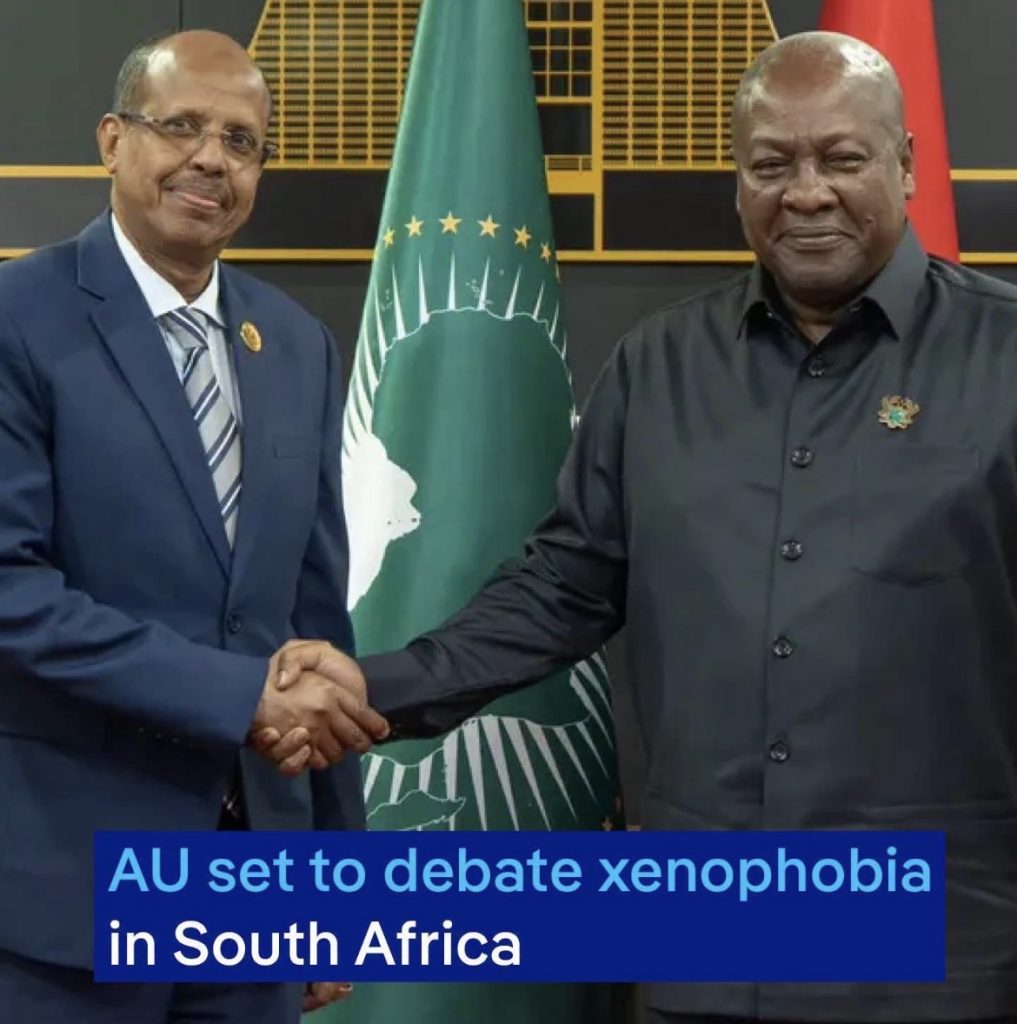
The African Union (AU) is expected to debate xenophobia and Afrophobia in South Africa following calls by member states, notably Ghana and Nigeria, to place the issue on the organisation’s agenda.

The planned discussion has prompted broader questions about the AU’s priorities, particularly why issues such as disputed elections and political violence in countries including Zimbabwe and Mozambique have not received similar levels of attention, despite their impact on regional stability and migration.

The explanation lies in how the African Union operates. As an intergovernmental organisation, the AU debates matters that its member states formally raise. In this instance, Ghana and Nigeria have taken the initiative in requesting a discussion on xenophobia and Afrophobia in South Africa.

Diplomatic observers note that while some other African countries may privately support the initiative, they have been less willing to do so publicly, partly because of their diplomatic relationships with South Africa and the governing African National Congress (ANC).

Some analysts argue that the current situation highlights an opportunity South Africa itself had in previous years. They contend that Pretoria could have taken a leading role in placing disputed elections and political violence in Zimbabwe and Mozambique before the African Union, potentially generating stronger regional pressure for reforms aimed at improving governance and reducing instability.

Instead, successive South African administrations largely pursued a policy commonly described as “quiet diplomacy” towards neighbouring governments. Supporters of the approach argued that discreet engagement was more likely to encourage dialogue and political settlements, while critics maintained that it limited public scrutiny of governments accused of electoral irregularities and political violence.

As a result, Zimbabwe and Mozambique have seldom become the focus of sustained debate within the African Union, despite recurring concerns raised by opposition groups, civil society organisations and international observers over electoral processes and political tensions.

By contrast, South Africa has become the subject of debate because member states have actively brought concerns over xenophobia and Afrophobia before the AU. Without influential member states championing an issue, it is less likely to receive significant attention within the organisation.

The contrast is not unprecedented. Following Zimbabwe’s disputed 2008 elections and the violence that ensued, then Ghanaian President John Kufuor publicly expressed concern over the crisis. At the same time, South African President Thabo Mbeki continued to pursue quiet diplomacy, maintaining that dialogue rather than public confrontation offered the best path towards a political settlement.

That historical divergence illustrates the central role member states play in shaping the African Union’s agenda. The organisation’s ability to debate and respond to regional crises depends largely on whether governments choose to place those issues before it.

Supporters of Ghana and Nigeria’s initiative argue that the debate on xenophobia reflects their assessment of their national and regional interests. Others contend that South Africa could similarly have prioritised discussions on governance challenges in neighbouring states if it believed doing so aligned with its foreign policy objectives.

Critics of successive South African governments argue that greater engagement by Pretoria within the African Union on disputed elections and political violence in Zimbabwe and Mozambique could have contributed to stronger regional efforts to address governance challenges that have been identified as factors contributing to migration and instability.

Some political commentators further argue that the ANC’s historical relationships with several liberation movements in Southern Africa influenced South Africa’s cautious diplomatic approach. Others dispute this assessment, maintaining that Pretoria’s policy was guided primarily by a desire to preserve regional stability and encourage negotiated political solutions.

As the African Union prepares to debate xenophobia and Afrophobia in South Africa, the discussion is also likely to renew wider debate over how the organisation determines its priorities and whether member states should take a more proactive role in placing governance, elections and political violence elsewhere on the continental agenda.

Share this
Tweet

Leave A Reply Cancel reply

You must be logged in to post a comment.

Bhekimpilo Mbedzi’s Detention Raises Fresh Questions Over Constitutional Rights in Zimbabwe
Previous Article
  • Recent Posts

    • African Union Set to Debate Xenophobia in South Africa as Questions Arise Over Regional Priorities
      July 24, 2026
    • Bhekimpilo Mbedzi’s Detention Raises Fresh Questions Over Constitutional Rights in Zimbabwe
      July 22, 2026
    • Tragic Passing of Jayden Adams at Age 25
      July 11, 2026
    • Man Arrested in Connection with Murder of Woman and Her Two Daughters
      July 10, 2026


House of Africa believes in challenging the status quo and inspiring leaders to secure the future of global citizens.

Explore

Home
About HOAF
Community
Privacy Policy
Terms of Service

Connect

Business Directory
Lounge (Forum)
Contact

Office

42 Selkirk Drive
Oakridge Park
Milton Keynes
England MK14 6FF
Facebook Instagram Youtube Twitter
Copyright © 2020 House of Africa Foundation.
All Rights Reserved. Company No.: 08314838
Site designed by Startable.
Skip to toolbar
  • About WordPress
    • WordPress.org
    • Documentation
    • Learn WordPress
    • Support
    • Feedback
  • Log in
  • Register